Information and Downloads
| Generator | Khronos glTF Blender I/O v4.2.57 (with hand-edits) |
|---|---|
| Copyright | CC0: This work has been marked as dedicated to the public domain. Model and texture by Ed Mackey. |
| Source | KhronosGroup/glTF-Sample-Assets |
| File size | 29.44 kB |
 Source glTF Source asset from
KhronosGroup/glTF-Sample-Assets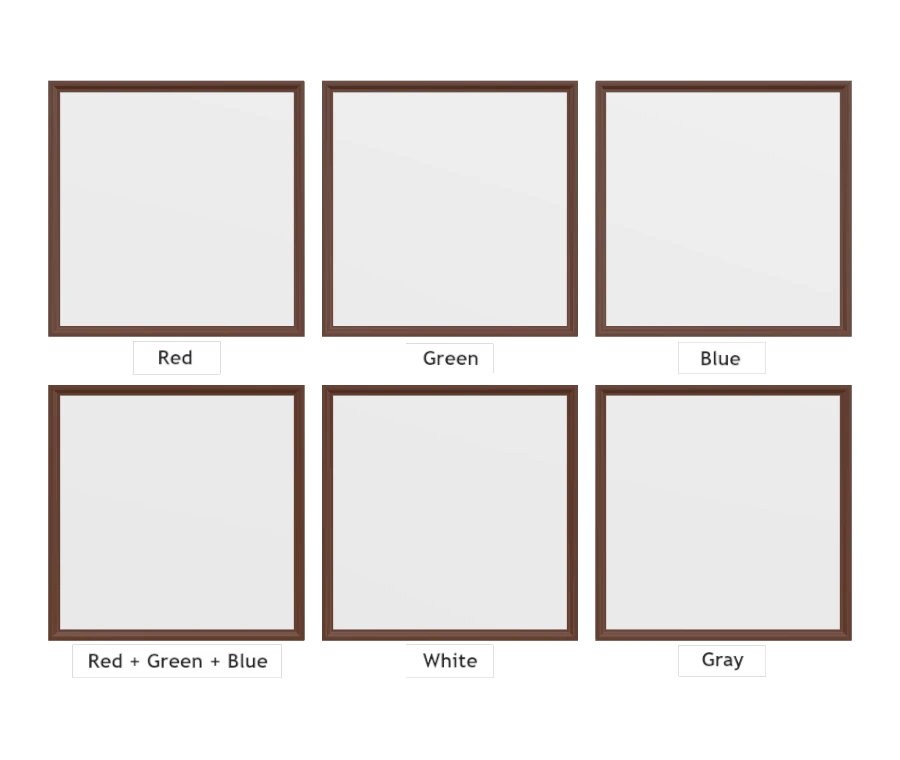
 three r185 Converted with upstream three.js 0.185.0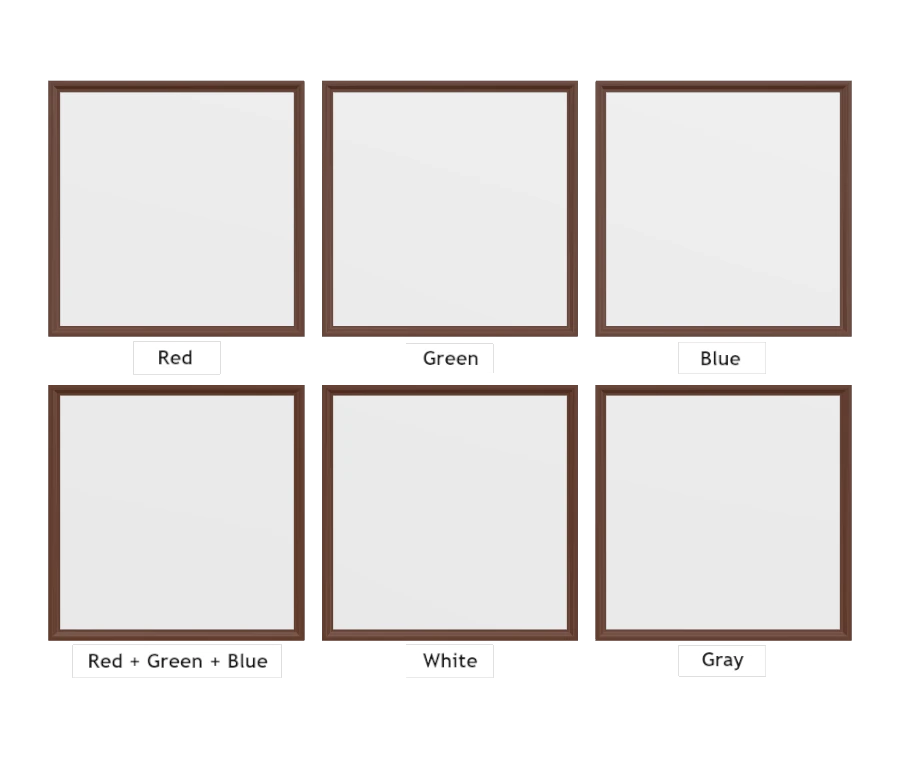
 Needle Converted with Needle Engine 5.1.2 USDZExporter
 Blender 5.1 Converted with Blender 5.1.2
  Adobe glTF Converted with OpenUSD 26.05 and Adobe glTF file-format plugin 2026.03
  GUC Converted with GUC 0.5
Description
Point Light Intensity Test
Tags
Extensions Used
- KHR_lights_punctual
- KHR_materials_unlit
Summary
This model tests KHR_lights_punctual intensity vs lamp color.
Operations
- Display in SampleViewer
- Download GLB
- Model Directory
Screenshot
Description
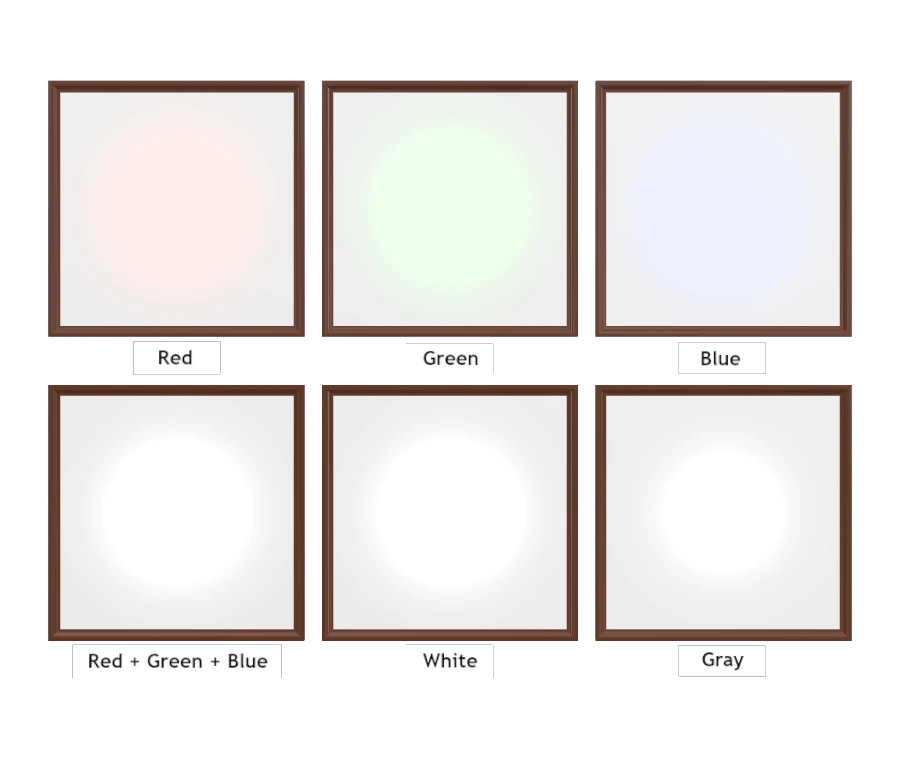
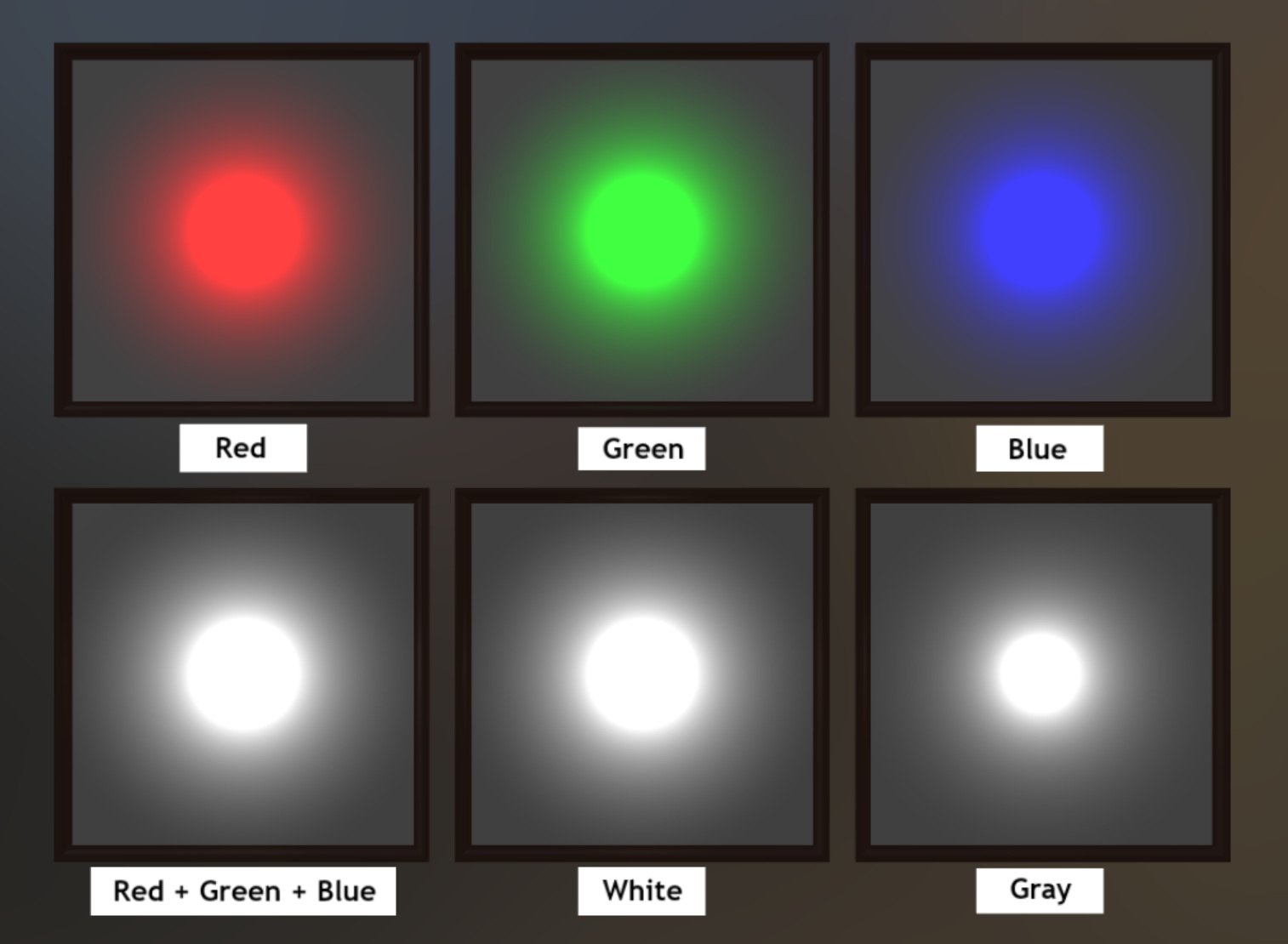
This model tests various colors of point lights (via KHR_lights_punctual) that all share the same intensity (1.0). It is intended to serve as a test for the following clarification that was added to the KHR_lights_punctual extension:
The
intensityrepresents the luminous intensity that the light would emit if it were colored pure white ([1.0, 1.0, 1.0]). Thecolorproperty acts as a wavelength-specific multiplier.
In other words, the specified color works as a "filter" in front of a light source of the specified intensity.
Expectations
As with other glTF sample assets, the exact appearance of this model need not match the screenshot exactly. The appearance depends on the brightness of the scene's IBL, renderer exposure settings, choice of tone mapping, and other considerations.
The expectation for the bottom row of this test is that the "Red + Green + Blue" test will be identical (or very nearly so) to the "White" test, and the "Gray" test will be visibly less bright (the radius of the overexposed area will be smaller).
If the rendered image is separated into red, green, and blue monochrome channels, the expectation for each of the corresponding tests from the top row is to match (or be nearly identical) to the "White" test in the bottom row. For example, when viewing the red channel of the output in isolation, the "Red" test and the "White" test should be very similar. Beware that the choice of tone mapping in the renderer can skew these results, so tone mapping should be disabled or made linear to the extent possible for the test.
Details
The test material in each case is (0.8, 0.8, 0.8). The lights are as follows:
| Label | Color |
|---|---|
| Red | (1.0, 0.0, 0.0) |
| Green | (0.0, 1.0, 0.0) |
| Blue | (0.0, 0.0, 1.0) |
| Red + Green + Blue | Three co-located lights, matching the above |
| White | (1.0, 1.0, 1.0) |
| Gray | (0.5, 0.5, 0.5) |
Legal
© 2025, Public. CC0 1.0 Universal
- Ed Mackey for Everything